Chefchaouen
The Blue City of the Rif Mountains.
What Is Chefchaouen Known For?
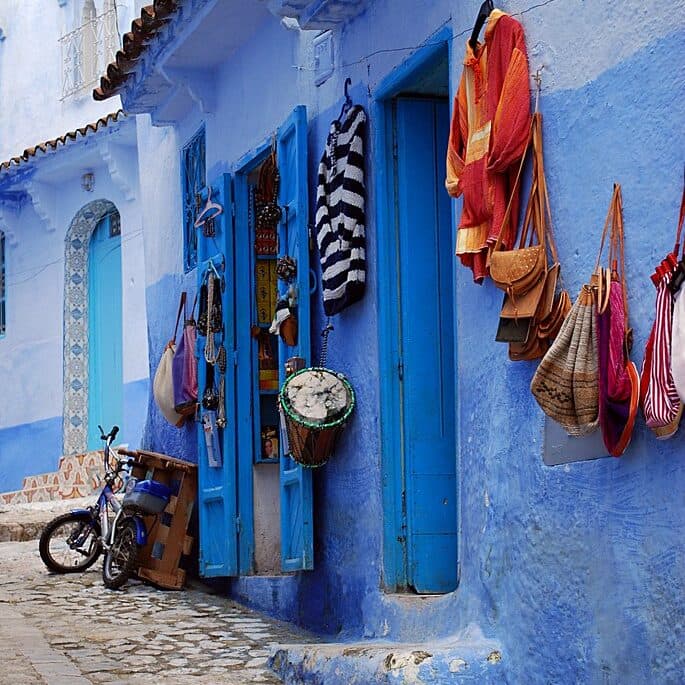
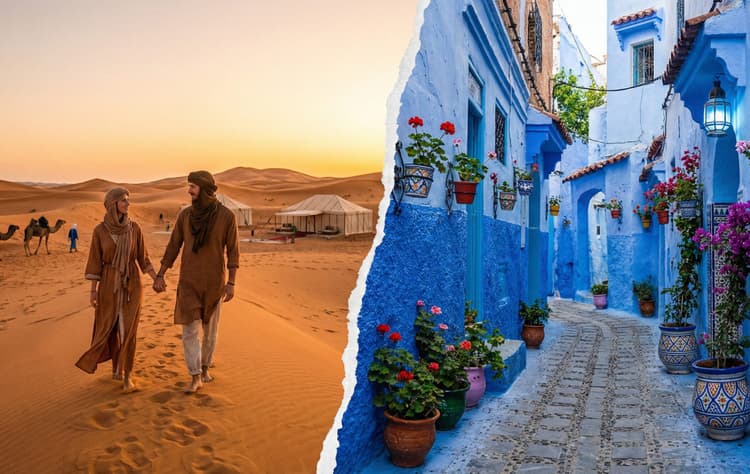
Chefchaouen is a historic mountain city in Morocco's Rif Mountains, founded as a holy city in 1471 around a fortified kasbah. Known as "The Blue City" for its blue-painted buildings, it later became a refuge for Muslim and Jewish communities from Al-Andalus.
It sits between Tétouan and Ouazzane, connecting travelers to Talassemtane National Park, Ras el-Maa, and the road routes from Tangier, Fes, Rabat, and Casablanca.
35.17° N, 5.27° W
Mediterranean mountain climate
Sania Ramel Airport (TTU)
35,700–46,200
Moroccan Dirham (MAD)
How Do You Get to Chefchaouen?
Find the best transport options to reach Chefchaouen comfortably.
By train and road
There is no direct train into Chefchaouen. A practical rail-based route is to take Al Boraq toward Tangier, then continue by road to Chefchaouen by bus, taxi, or transfer. This option is useful for travelers who prefer the comfort of Morocco’s rail network for the first part of the journey, but the final approach to the Blue City is always by road.
By bus
CTM and long-distance bus services provide the most clearly verified public transport option from Casablanca to Chefchaouen. Sources place the journey at around six to six and a half hours, with prices varying by operator, booking date, and class. It is the most straightforward budget choice, though seats should be booked ahead during busy periods.
By car
Driving from Casablanca gives the greatest flexibility, especially for travelers who want to stop in Rabat, Tangier, or the northern countryside before entering the Rif Mountains. The route is practical but long, and the final approach to Chefchaouen is by mountain road. Fuel, tolls, and rental costs vary significantly.
By private taxi
A private transfer offers door-to-door travel from Casablanca to Chefchaouen without changing stations or managing luggage. It is best suited to families, small groups, or travelers arriving from the airport who want a direct connection. Confirm the current price directly with the operator before departure.
By rideshare
Rideshare and shared-transfer options can occasionally connect Casablanca with northern Morocco, but availability varies by date and driver. This option is most useful for flexible travelers who can confirm luggage space, pickup location, and final drop-off in Chefchaouen in advance.
What Are Chefchaouen's Main Districts?
Chefchaouen is organized into 6 main districts, from The Blue Medina to Spanish Mosque Hillside, each with its own character and things to do.
What Is the History Behind Chefchaouen's Kasbah and Gates?
Chefchaouen was founded in 1471 around a fortified kasbah associated with Moulay Ali Ben Rachid, built as a defensive stronghold against Portuguese expansion.
It later became a refuge for Muslim and Jewish communities from Al-Andalus after the fall of Granada in 1492. Its key monuments today include the Kasbah, Plaza Uta el-Hammam, the Grand Mosque, Bab El Ain, Bab El Onsar, Ras el-Maa, and the Spanish Mosque viewpoint.
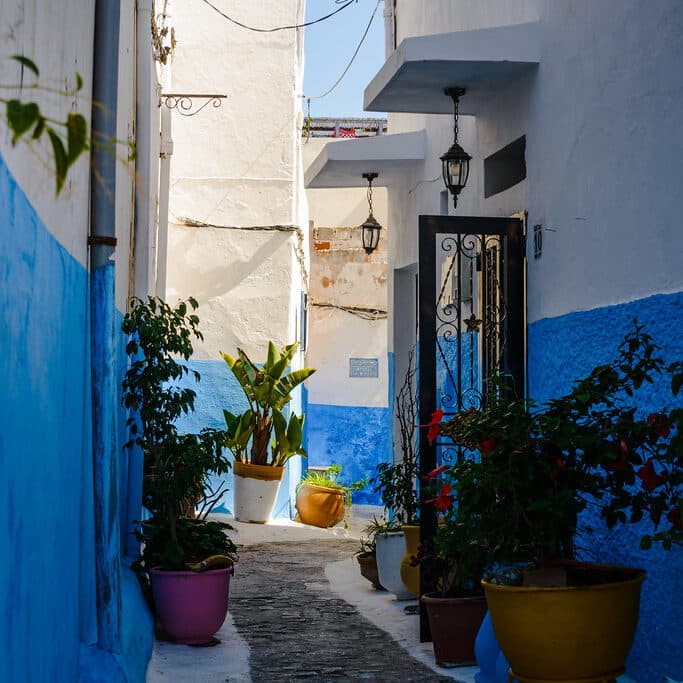
The Kasbah
The 15th-century red-walled fortress on Plaza Uta el-Hammam, associated with founder Moulay Ali Ben Rachid and the origins of Chefchaouen.
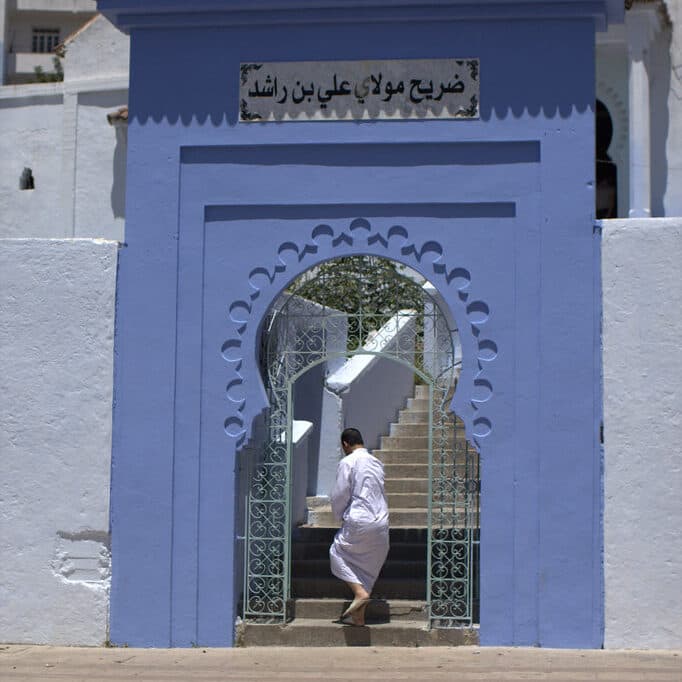
Bab El Ain
A main southern entrance into the Medina, recognized as one of Chefchaouen’s principal historic access doors.
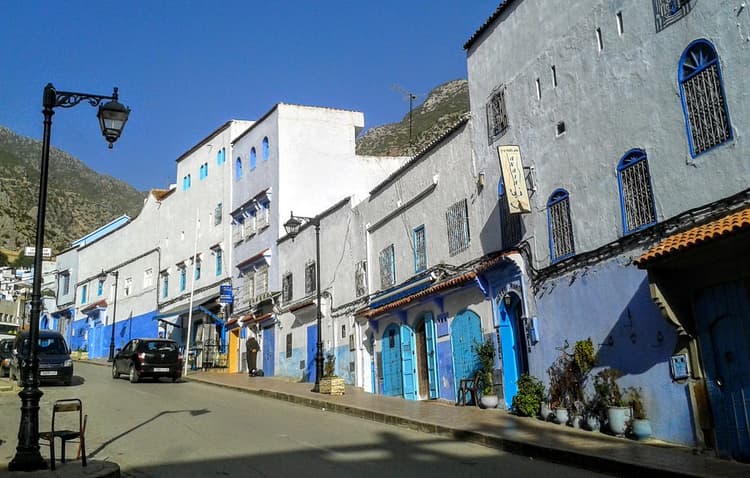
Bab El Onsar
An eastern gate area connected with the route toward Ras el-Maa and the hillside path leading to the Spanish Mosque viewpoint.
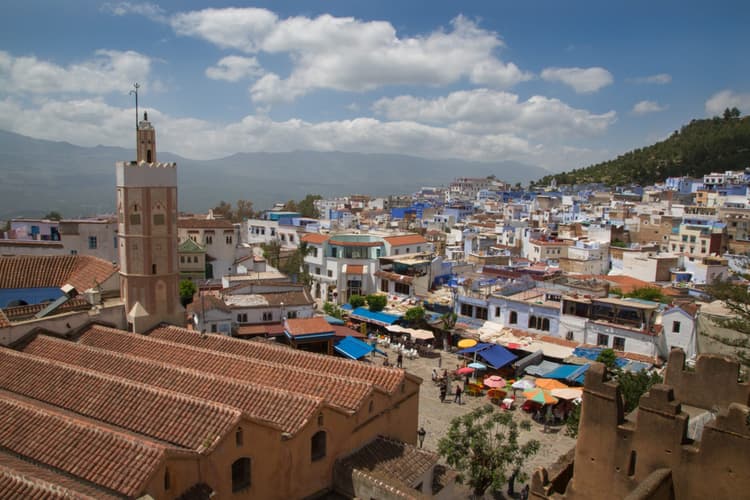
The Grand Mosque
The 15th-century mosque beside the central square, known for its distinctive octagonal minaret and historic presence in the old town.
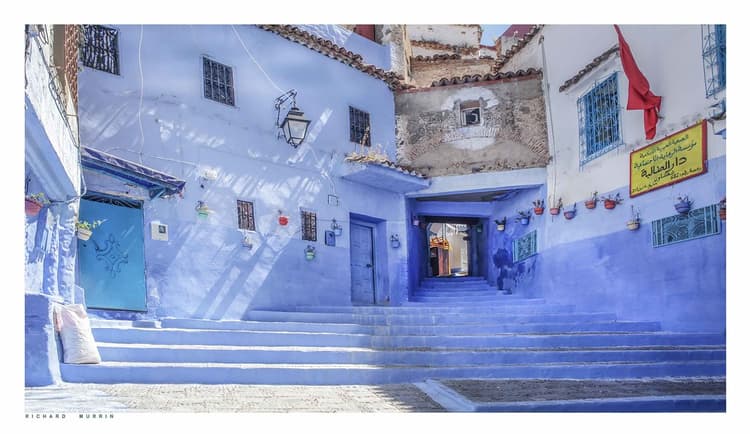
Ras el-Maa
A natural spring and waterfall area on the eastern edge of the Medina, long used as a gathering point and scenic walking stop.
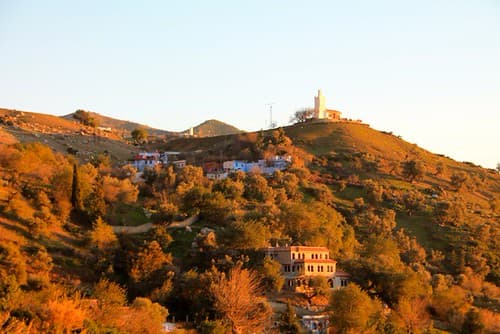
Spanish Mosque Viewpoint
A hillside mosque and viewpoint above the old town, commonly visited at sunset for panoramic views over Chefchaouen.
What Can You Buy in the Chefchaouen Souks?
Chefchaouen's shopping centers on the medina's narrow souks and artisan lanes, calmer and lower-pressure than Marrakech or Fes, with relaxed bargaining.
Look for Rif wool products, leather goods, blue-and-white ceramics, natural soaps, herbs, honey, and olive oil.
The Souk Directory
Medina Artisan Lanes
The main shopping lanes for wool blankets, rugs, ceramics, leather slippers, baskets, and painted blue-and-white crafts.
Souika
A central old-town area useful for small shops, guesthouse streets, traditional clothing, scarves, and everyday Medina purchases.
El Kharrazine
A Medina quarter associated with craft lanes and small shops selling leather goods, belts, bags, slippers, and local souvenirs.
Rif Sebbanin
A traditional quarter near the eastern side of the Medina, useful for local atmosphere, woven goods, and routes toward Ras el-Maa.
Plaza Uta el-Hammam Shops
The central square area for cafés, easy browsing, ceramics, souvenirs, and shops near the Kasbah and Grand Mosque exterior.
The "Fair Price" Reference Table (2024 Estimates)
| Item | Local Name | Est. Price (MAD) |
|---|---|---|
| Leather Slippers | Babouche | $10 – $30 |
| Wool Blanket | Hayek / Handwoven blanket | $25 – $80 |
| Small Rug or Carpet | Zarbia | $40 – $200+ |
| Blue-and-White Ceramics | Fekhar / Ceramics | $5 – $30 |
| Spices | Atar / Spices | $2 – $10 / small bag |
| Scarf | Foulard | $5 – $20 |
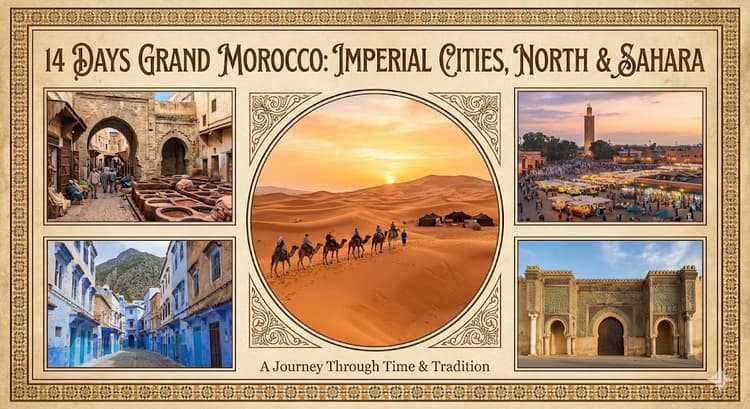
Which Tours Visit Chefchaouen?
What Are the Best Things to Do in Chefchaouen?
Frequently Asked Questions
Yes. Travel-safety sources describe Chefchaouen as low risk overall, with violent crime uncommon and a calmer Medina than many larger Moroccan cities. The main concerns are petty theft, tourist scams, unofficial guides, steep streets, hiking safety, and avoiding drug-related situations.
Spring and autumn are the most comfortable seasons. March to May and September to November are commonly recommended for mild weather, manageable crowds, good light, and cooler mountain conditions than Morocco’s hotter lowland destinations.
No Chefchaouen-specific tap-water safety data is published. Travelers with sensitive stomachs should use bottled or filtered water, especially for short visits, and carry water when walking to Ras el-Maa or the Spanish Mosque viewpoint.
The Moroccan Dirham (MAD). Carry cash for smaller Medina purchases, cafés, taxis, and markets, while using ATMs or exchange offices for larger withdrawals. Card acceptance can vary in small shops and artisan stalls.