Who the Amazigh are, the languages they speak, the Tifinagh script, the traditions you will see on a trip, and the valleys and villages where you can meet them.
The Amazigh, often called Berbers, are the Indigenous people of North Africa. In Morocco they live across the Rif, the Middle Atlas, the High Atlas, the Anti-Atlas and the edges of the Sahara, and much of the country's food, architecture and crafts comes from their culture. Their language, Tamazight, has been an official language of Morocco alongside Arabic since the 2011 constitution, written in the Tifinagh script you see on road signs and public buildings.
This guide covers who the Amazigh are, the languages they speak, the traditions a traveller notices, and the mountain villages and desert communities where you meet them on a trip.
The Indigenous people of North Africa, living in Morocco long before the arrival of Arabic.
Amazigh (plural Imazighen) is the name the people use for themselves; it is usually translated as "free people". Amazigh communities are found from Morocco to Egypt's Siwa oasis and south into the Sahara, and Morocco is home to one of the largest Amazigh populations. Today many Moroccans have Amazigh roots whether or not they speak an Amazigh language.
Amazigh is the name the people use for themselves; Berber is the older outside name.
"Berber" comes from the Greek and Latin words for foreigners, and it is still widely used in English, including in names like Berber carpets. Many Amazigh people prefer Amazigh, and it is the term used by Moroccan institutions. Using Amazigh is always correct and appreciated.
Three main Amazigh languages, each tied to a region: Tarifit, Tamazight and Tachelhit.
Tarifit is spoken in the eastern Rif, around Al Hoceima and Nador, Central Atlas Tamazight in the Middle Atlas and the eastern High Atlas, and Tachelhit in the western High Atlas, the Anti-Atlas and the Souss plain around Agadir. Many Amazigh speakers also speak Darija, Moroccan Arabic, and often French. Our guide to the languages of Morocco explains how they fit together.
| Criterion | Tarifit | Central Atlas Tamazight | Tachelhit |
|---|---|---|---|
| Where | Eastern Rif (Al Hoceima, Nador) | Middle Atlas and eastern High Atlas | Western High Atlas, Anti-Atlas, Souss |
| On our routes | Off our usual routes | Azrou, Midelt and the Middle Atlas crossing | Imlil, the Ourika Valley, Taroudant |
The alphabet used to write Amazigh languages, seen on Moroccan road signs and public buildings.
Tifinagh descends from an ancient script found in rock inscriptions across North Africa and the Sahara. Its modern standard form is promoted by the Royal Institute of Amazigh Culture (IRCAM), created in 2001, and it is taught in schools. On a trip you will see it next to Arabic and French on road signs and government buildings.
Mint tea hospitality, earthen villages and kasbahs, woven carpets, silver jewellery and dishes like couscous and tagine.
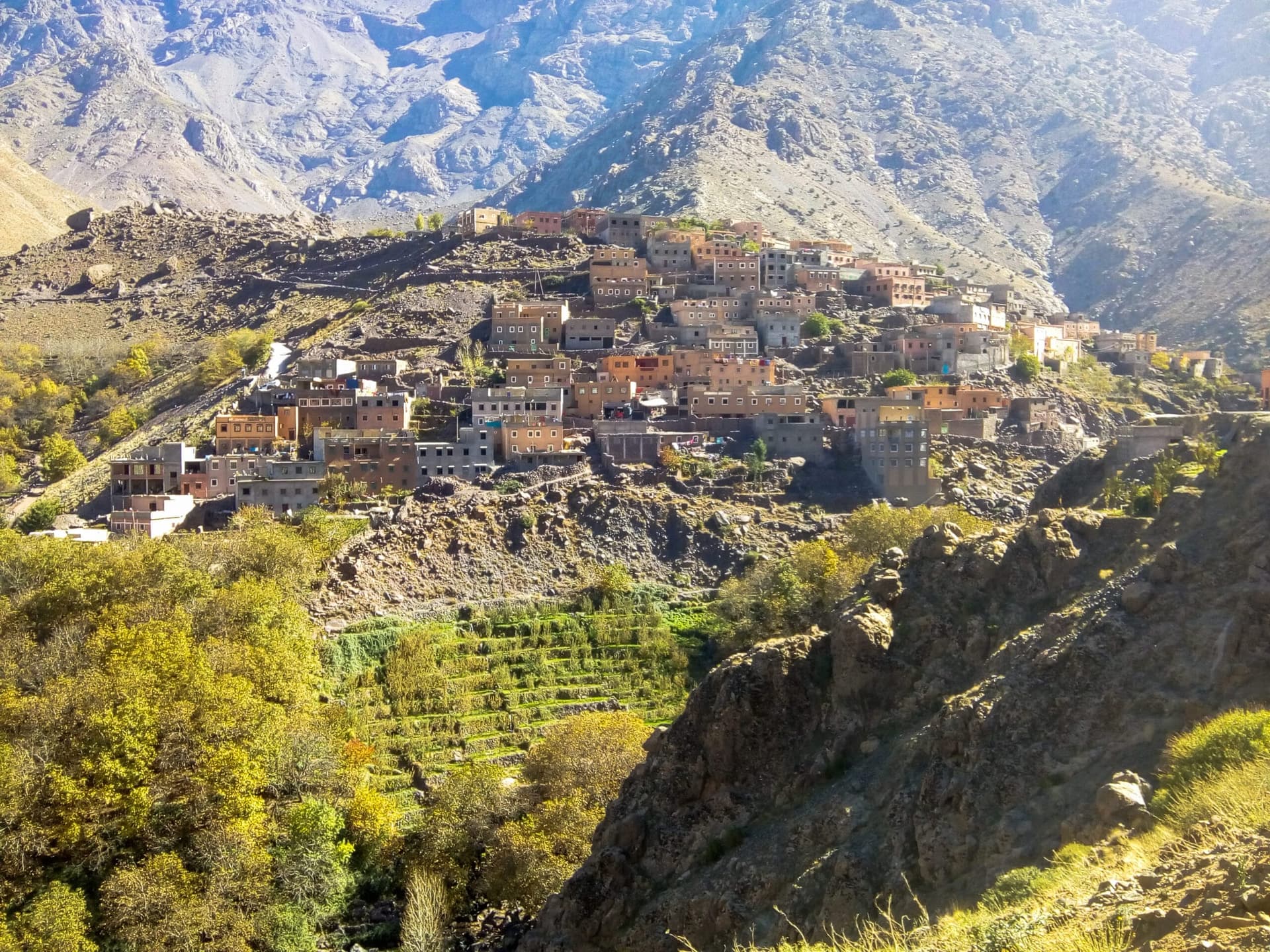
Hospitality comes first: being offered mint tea in a village house is the most common moment of Amazigh culture a visitor experiences. Architecture is another: the earthen ksour and kasbahs of the south, and fortified communal granaries in the Anti-Atlas. Hand-woven carpets and silver jewellery are sold in every souk. Couscous, now recognised by UNESCO as shared heritage of the Maghreb, is part of the same food culture as tagine; see Moroccan food.
The Amazigh New Year, celebrated in mid-January and a national public holiday in Morocco since 2024.
Yennayer marks the start of the agricultural year in the Amazigh calendar. Families share a special meal, and celebrations with music and dance are held in towns and villages, particularly in the Souss and the Atlas. Other festivals are covered in Morocco's festivals and events.
In the High Atlas villages, the valleys of the south and the desert communities around Merzouga.
The easiest place is the High Atlas south of Marrakech: in Imlil and the village of Aroumd beneath Toubkal, and in the Ourika Valley, where day trips stop for tea in an Amazigh house. Further south, the Dades Valley, Ait Benhaddou and the Draa Valley are Amazigh country, and around Merzouga our desert days include tea with semi-nomadic families on the black hamada.
Accept tea when it is offered, dress modestly in villages and always ask before photographing people.
A few words of greeting go a long way; our Darija and French phrases cover the basics, and a guide can help with an Amazigh greeting. Ask before taking photos of people, especially women and children, and do not hand out sweets or money to children. The Moroccan customs and etiquette guide has more.
A walk to the village of Aroumd beneath Toubkal and mint tea in a village house. From $80 per person for two.
See the tourA river valley, an argan cooperative and tea in an Amazigh house. From $70 per person for two.
See the tourThe High Atlas villages on foot, with a night at the refuge.
See the tourKasbahs, the Dades and Todra valleys and a night in the Sahara.
See the tourYes. Amazigh is the name the people use for themselves; Berber is the older outside name, still common in English. Many prefer Amazigh.
In Morocco, three main Amazigh languages: Tarifit in the eastern Rif, Central Atlas Tamazight in the Middle Atlas, and Tachelhit in the High Atlas, Anti-Atlas and Souss. Tamazight has been an official language of Morocco since 2011.
Amazigh is usually translated as "free people". The plural is Imazighen.
Imlil and the village of Aroumd in the High Atlas, about 1.5 hours from Marrakech, and the Ourika Valley, also about 1.5 hours away, where day trips stop for tea in an Amazigh house.
Yennayer is celebrated in mid-January and has been a national public holiday in Morocco since 2024.