Draa Valley
Morocco’s palm-grove road to the Sahara, lined with kasbahs, ksour and date oases.
What Is Draa Valley Known For?
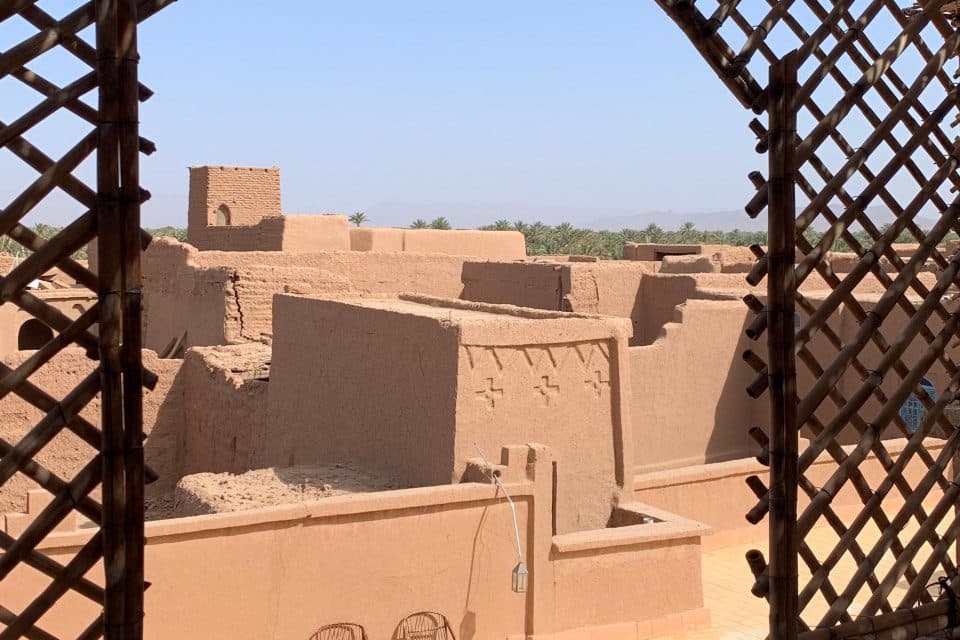
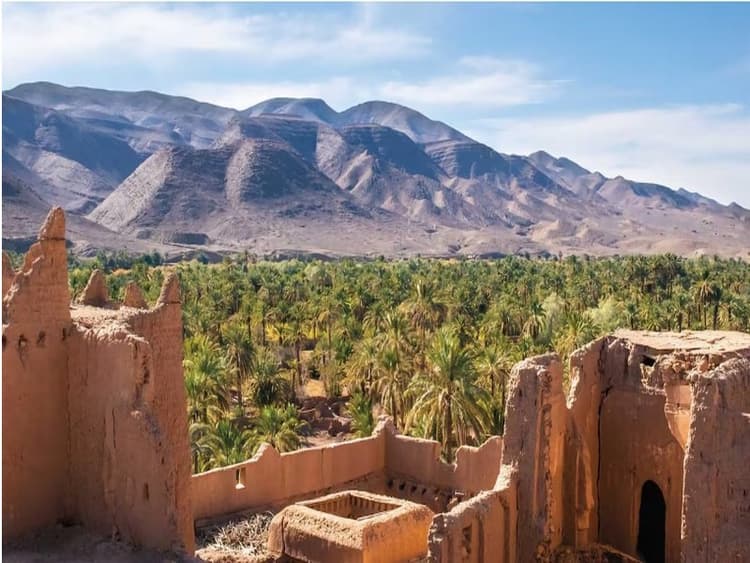
Draa Valley is a 200km oasis corridor in southern Morocco, stretching from Ouarzazate and Agdz through Zagora toward M'Hamid, following the Drâa River — widely described as Morocco's longest.
Lined with date-palm groves, mud-brick kasbahs, and ksour, the valley was historically a major trans-Saharan caravan route carrying gold, salt, and spices between the Sahara and northern Morocco.
31.1564° N, 5.2147° W
Arid desert / semi-arid
Ouarzazate Airport
approximately 225,000 across the valley (Zagora Province)
Moroccan Dirham (MAD)
How Do You Get to Draa Valley?
Find the best transport options to reach Draa Valley comfortably.
By train and bus
There is no simple direct rail journey into the Draa Valley, so most travelers combine the train network with a bus, private transfer or rental car for the southern leg. A practical route is to travel by train toward Marrakech, then continue over the High Atlas via Ouarzazate, Agdz and Zagora. This option is comfortable for the first stage but requires careful coordination for the onward desert-road section.
By plane
Air access is the fastest option when schedules align. Zagora Airport has been listed with Casablanca connections, while Ouarzazate Airport is the closest major airport for many Draa Valley itineraries. Flight availability can change, so confirm live schedules before building a trip around this route, then arrange a taxi or transfer onward to Agdz, Zagora or M’Hamid.
By bus
Long-distance buses are a budget-conscious way to reach Zagora, usually involving routes through Marrakech or Ouarzazate. Coaches are practical for travelers heading to the main town, but they are less flexible for stopping at ksour, palm groves and villages along the way. Check CTM, Supratours or current booking platforms for timetables before departure.
By car
Driving from Casablanca gives the greatest flexibility for a valley itinerary. The route usually passes Marrakech, crosses the High Atlas and continues through Ouarzazate and Agdz before reaching Zagora. It is a long journey, best broken with an overnight stop, but it allows travelers to pause at kasbahs, viewpoints and oasis villages that public transport may bypass.
By private taxi
A private taxi or pre-booked transfer is the most seamless overland option, especially for families or travelers carrying luggage. It removes the need to coordinate train and bus connections and can be routed directly to Agdz, Zagora or a desert lodge. Confirm whether the price includes mountain-road stops, waiting time and night driving before departure.
By rideshare
Rideshare options may appear on the northern and central portions of the route, especially between Casablanca, Marrakech and Ouarzazate. They are less predictable for the final Draa Valley leg, so this method works best for flexible travelers who can combine shared rides with buses or local transfers. Always confirm luggage space and the exact drop-off point.
What Are Draa Valley's Main Districts?
Draa Valley is organized into 6 main districts, from Agdz (Northern Oasis Gateway) to M’Hamid El Ghizlane (Last Oasis), each with its own character and things to do.
What Is the History Behind the Draa Valley's Ksour and Kasbahs?
The Draa Valley's history is tied to oasis agriculture, Amazigh communities, and trans-Saharan trade — for centuries the corridor connected Saharan routes with northern Moroccan cities, carrying gold, salt, and spices.
Its ksour, kasbahs, and zawiyas preserve the memory of that movement, alongside date palms and irrigation gardens that made settlement possible.
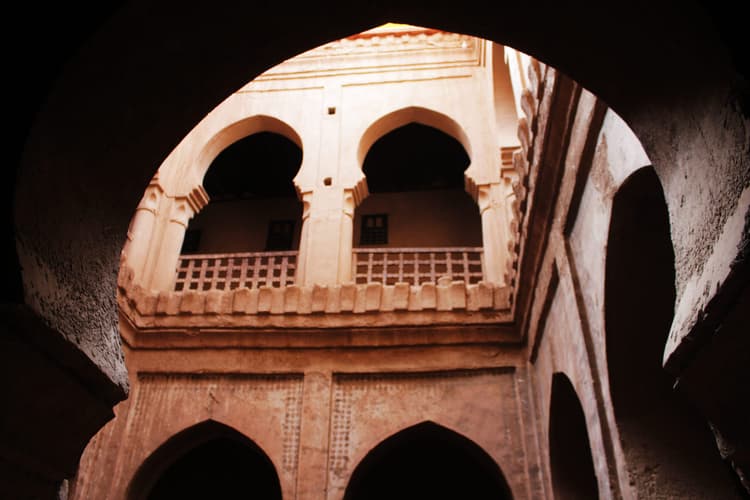
Ksar Tamnougalt
A well-preserved fortified village near Agdz, known for its mud-brick kasbah architecture, oasis gardens and position on the historic caravan route.
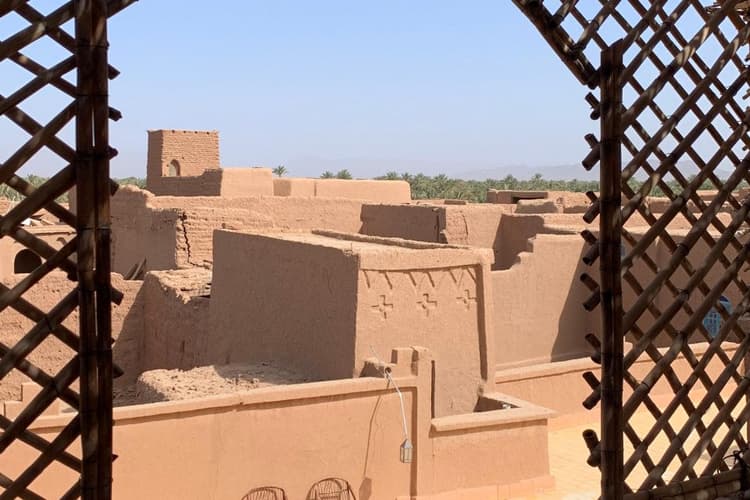
Ksar Tissergate
A historic ksar in the Draa Valley, representing the fortified earthen settlements that protected oasis communities and caravan wealth.
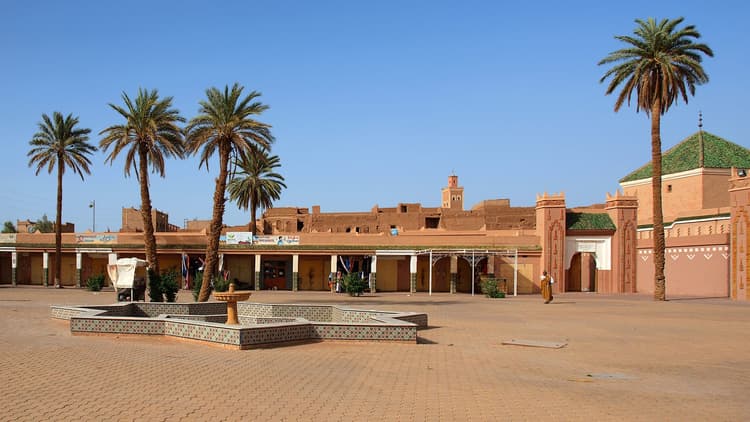
Zawiya Naciria and Quranic Library
The religious and manuscript heritage center of Tamegroute, associated with the Zawiya Naciria, Quranic learning and the valley’s scholarly traditions.
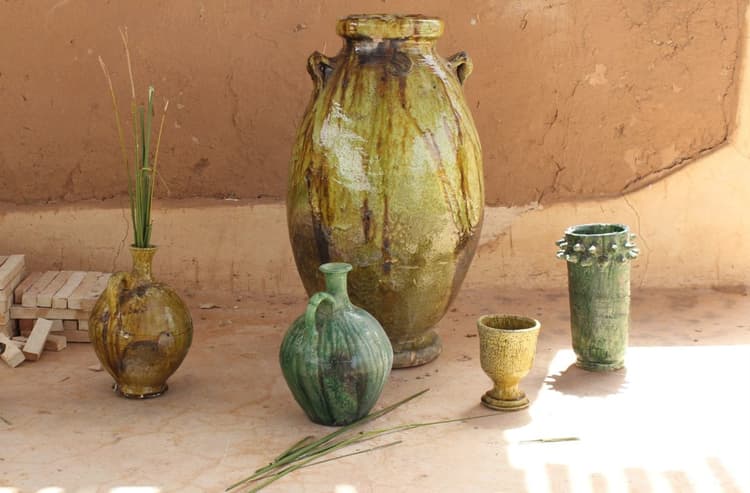
Tamegroute Pottery Workshops
A living craft quarter where artisans produce the Draa Valley’s distinctive green-glazed ceramics using traditional workshop methods.
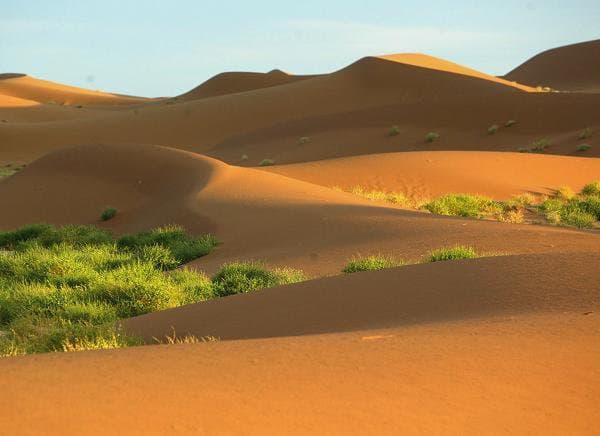
Zagora Palm Grove and Tinfou Dunes
The palm-grove landscapes around Zagora and the nearby Tinfou dunes show the transition from cultivated oasis to desert terrain.
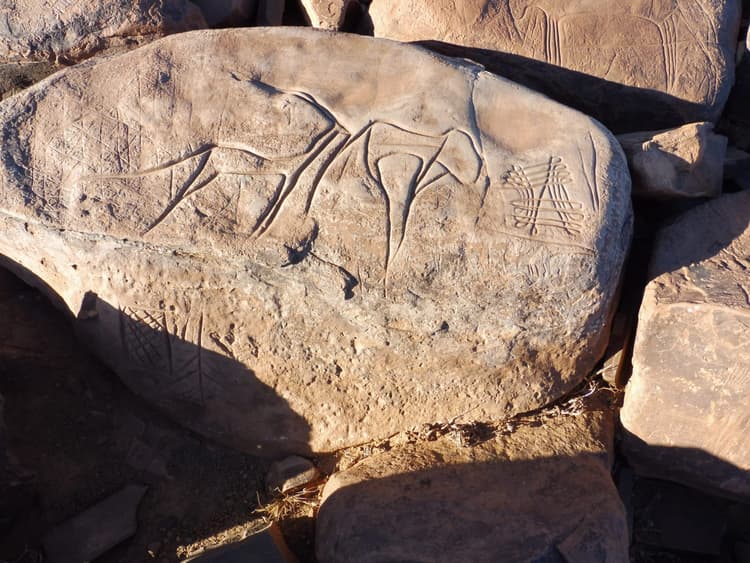
Aït Ouazik Petroglyphs
A prehistoric rock-art area in the broader south-eastern Morocco circuit, associated with petroglyphs near Tazzarine and the arid Draa region.
What Can You Buy in the Draa Valley?
Shopping in the Draa Valley focuses on oasis and desert-region products rather than large urban medina souks — look for dates, Tamegroute green pottery, henna, and natural dyes.
Woven carpets, leather slippers, and local jewelry are found in towns like Agdz, Zagora, Tamegroute, and M'Hamid.
The Souk Directory
Tamegroute Pottery Workshops
Distinctive green-glazed ceramics, tagines, bowls, tiles and decorative pieces produced in village workshops.
Zagora Market
Regional market base for everyday goods, spices, textiles, travel supplies and products from surrounding oasis communities.
Agdz Market
Small-town oasis shopping for dates, household goods, local produce and practical items before entering the valley.
M’Hamid Souk
Desert-edge souk atmosphere with everyday goods, simple crafts and supplies for communities near the last oasis.
Oasis Craft Stalls
Carpets, kilims, henna, natural dyes, babouches and jewelry sold through workshops, roadside stalls and small village shops.
The "Fair Price" Reference Table (2024 Estimates)
| Item | Local Name | Est. Price (MAD) |
|---|---|---|
| Tamegroute Tagine Bowl | Tajine Tamegroute | $5 – $11 |
| Large Decorative Pottery | Fekhar Tamegroute | $21 – $43 |
| Small Kilim or Rug | Zarbia | $53 – $320 |
| Large Wool Rug | Zarbia Kbira | $213 – $2,130+ |
| Small Ceramic Bowl or Plate | Sahfa | $4 – $32 |
| Saffron | Zaafran Beldi | $2.06 / Gram |
Which Tours Visit Draa Valley?
What Are the Best Things to Do in the Draa Valley?

Frequently Asked Questions
The cooler period from October to April is widely recommended for kasbah visits, palm-grove walks and desert excursions. April, May and October are especially pleasant, while peak summer can exceed 40°C and is difficult for walking or camping.
Yes, normal travel in the main oasis towns is generally manageable, but remote desert routes require caution. Use experienced guides for Erg Chigaga or off-road areas, drive carefully over mountain and desert roads, and avoid underestimating heat, distance and limited services.
No Draa-specific tap-water safety data is published, so most travelers use bottled or filtered water, especially in rural villages and desert camps. Carry extra water during road trips, palm-grove walks and camel treks.
The local currency is the Moroccan Dirham (MAD). ATMs are more likely in main towns such as Zagora or Ouarzazate than in small villages or desert camps, so carry cash before continuing toward M’Hamid or remote bivouacs.