Volubilis
Morocco’s Best-Preserved Berber-Roman City and UNESCO Frontier Settlement.
What Is Volubilis Known For?
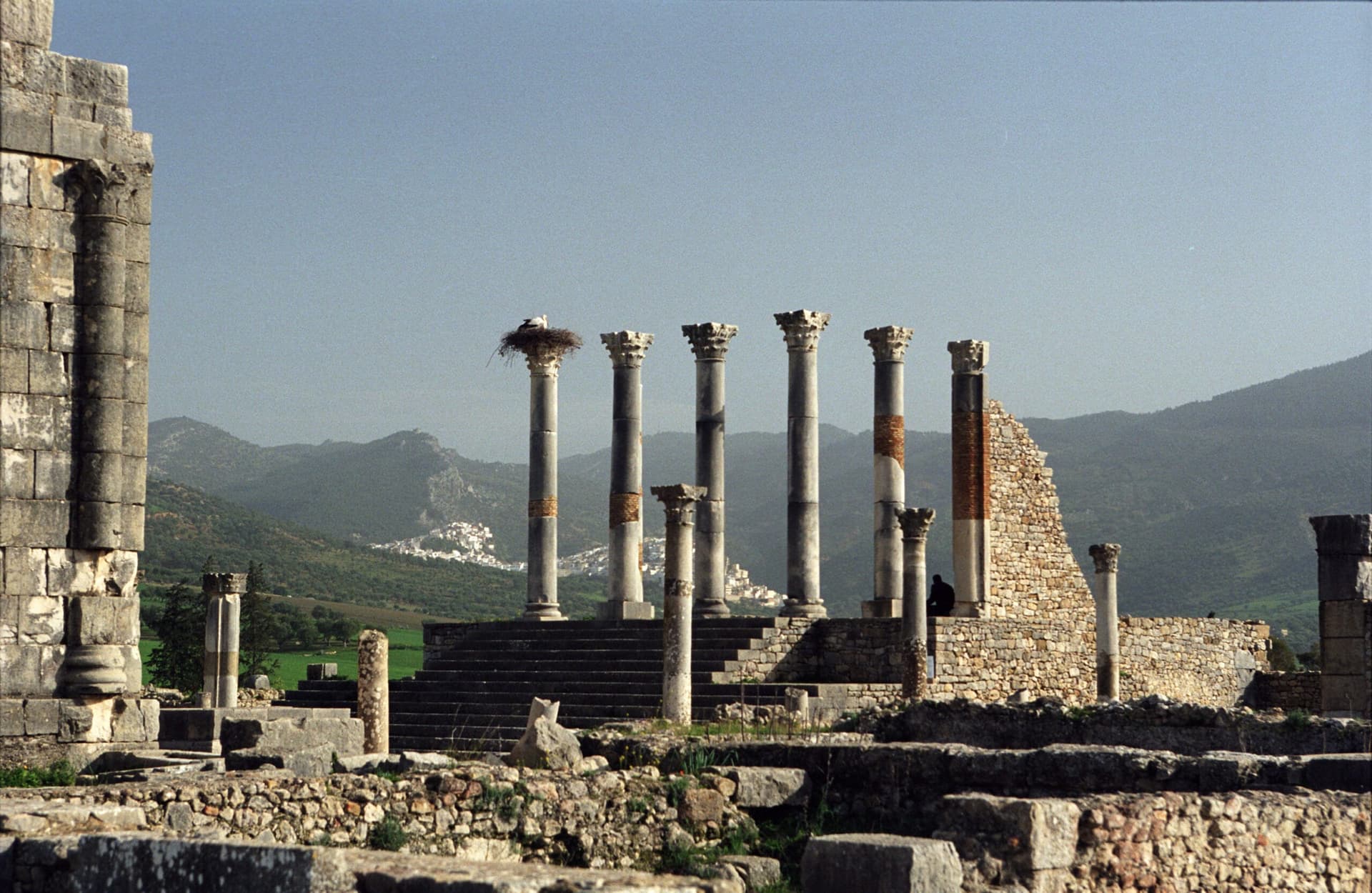
Volubilis is a UNESCO World Heritage Roman archaeological site in northern Morocco, near Meknes, founded in the 3rd century B.C. as the Mauritanian capital before becoming an outpost of the Roman Empire.
Its Berber-Roman remains — mosaics, the Basilica, the Capitol, the Decumanus Maximus, and the Arch of Caracalla — make it Morocco's best-preserved Roman frontier settlement, near the sacred hill town of Moulay Idriss Zerhoun.
34.071° N, 5.554° W
Inland Mediterranean
Fes-Saïss Airport
No resident population
Moroccan Dirham (MAD)
How Do You Get to Volubilis?
Find the best transport options to reach Volubilis comfortably.
By train
Take the ONCF train from Casablanca to Meknes, then continue by taxi or grand taxi toward Moulay Idriss Zerhoun and Volubilis. This is the most practical public route, combining a comfortable intercity rail journey with a short final road transfer. Reported Casablanca–Meknes train times are around three hours, with the final Meknes–Volubilis leg adding about 30–45 minutes.
By plane
Flying is usually not the simplest standalone option from Casablanca unless you are already connecting through an airport itinerary. The nearest practical airport for Volubilis is Fes-Saïss, after which travelers still need ground transport toward Meknes, Moulay Idriss Zerhoun, and the archaeological site. Check current schedules carefully before choosing this route.
By Bus
Long-distance bus travel can work by routing from Casablanca toward Meknes and arranging the final taxi connection to Volubilis. This option is slower and less seamless than the train but may suit budget travelers who prefer coach departures or find better bus schedules. Confirm CTM or other operator timetables before departure.
By Car
Driving from Casablanca gives the most direct control over timing and stops, with road-transfer sources advertising roughly a three-hour journey to Volubilis. It is useful for travelers combining the ruins with Meknes and Moulay Idriss Zerhoun in one day. Allow extra time for navigation, parking arrangements, and breaks.
By private taxi
A private taxi or pre-booked transfer offers door-to-door convenience from Casablanca to the archaeological site. This is the easiest option for families, small groups, or travelers carrying luggage, but it costs substantially more than public transport. Confirm the total fare, waiting time, and return arrangements before departure.
By rideshare
Rideshare options may be possible toward Meknes or nearby towns, followed by a local taxi to Volubilis. This can reduce costs and provide a flexible alternative to buses, though availability depends heavily on the day and route. Confirm luggage space and the exact drop-off point before booking.
What Are Volubilis's Main Districts?
Volubilis is organized into 6 main districts, from Forum, Basilica and Capitol Civic Heart to Visitor Entrance and Interpretation Zone, each with its own character and things to do.
What Is the History Behind Volubilis's Roman Ruins?
Volubilis was founded in the 3rd century B.C. as the Mauritanian capital before becoming an outpost of the Roman Empire in Mauretania Tingitana.
It preserves a long occupation sequence, from Berber and Mauretanian foundations through Roman urban development and later connections with early Islamic Morocco and the Idrisid dynasty, including surviving mosaics, streets, walls, oil presses, and baths.
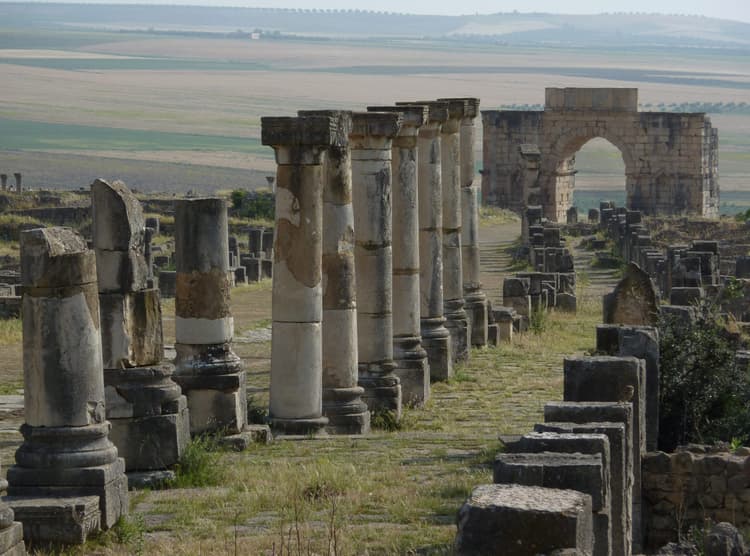
Tangier Gate
The old city wall entrance at one end of the Decumanus Maximus, associated with the historic approach into the Roman town.
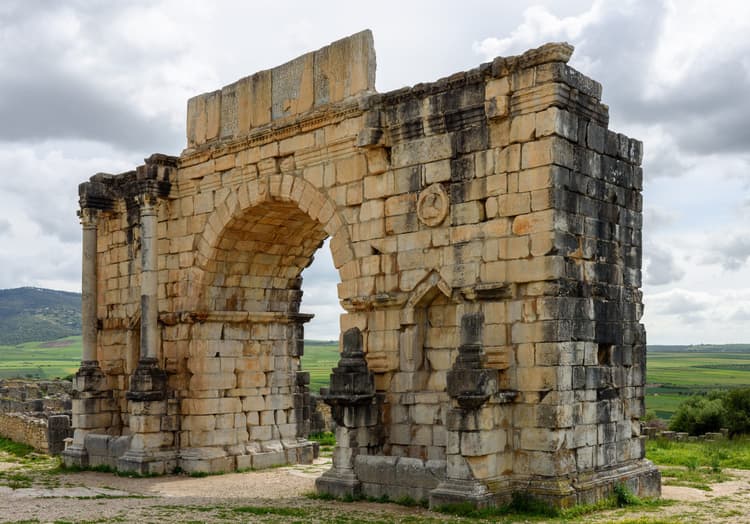
Arch of Caracalla
The triumphal arch on the Decumanus Maximus, erected between December 216 and April 217 C.E. in honour of Emperor Caracalla.
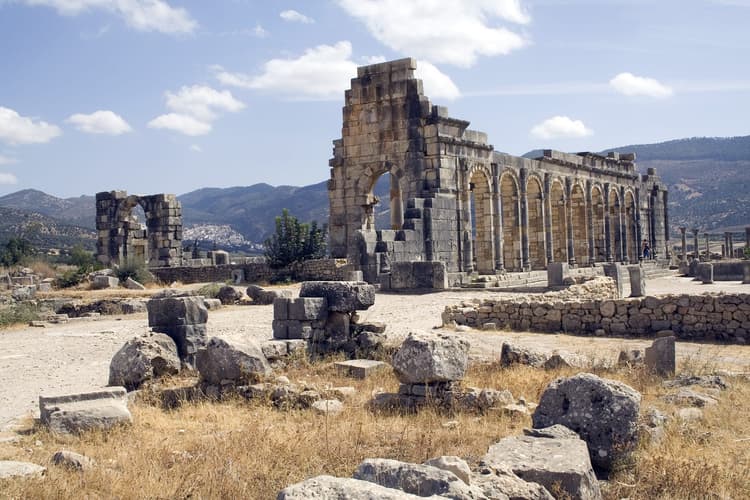
Basilica
A major public building in the civic core and one of the most striking architectural features visible across Volubilis.
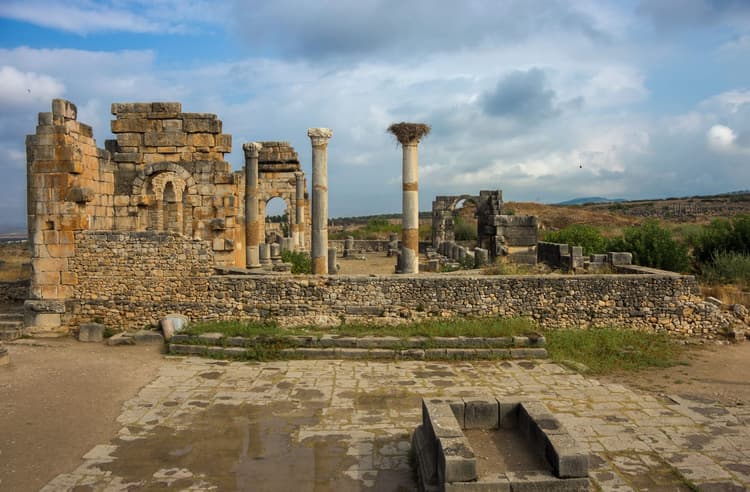
Forum
The central civic square of Volubilis, surrounded by major public monuments in the heart of the Roman city.
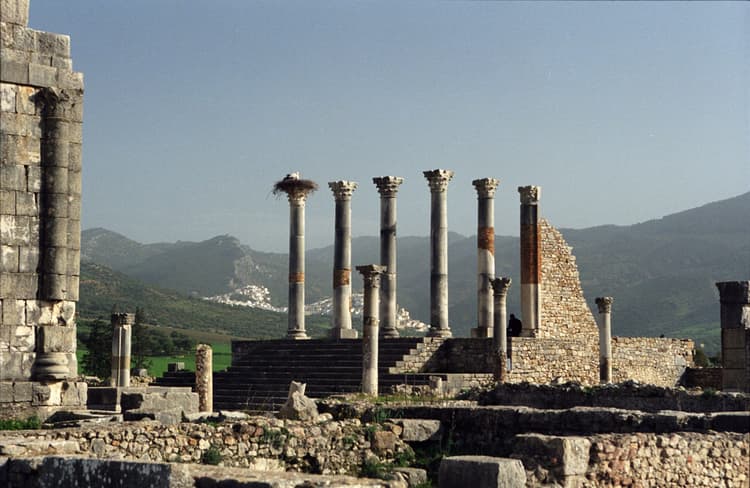
Capitol
The Capitoline Temple, also associated with the Temple of Jupiter, was the principal religious monument of the civic core.
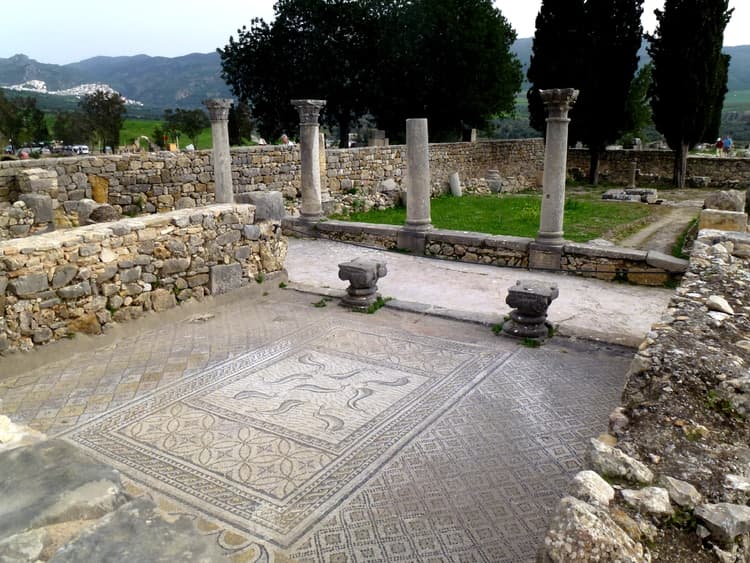
House of Orpheus
A famous named house preserving one of Volubilis’s best-known mosaic themes, connected with the mythological figure Orpheus.
Can You Shop at Volubilis?
Volubilis is an archaeological site rather than a shopping destination — plan for light refreshments at small cafes or shops near the entrance.
For a fuller meal, eat in nearby Moulay Idriss Zerhoun, where simple local eateries serve tagines, bread, tea, and snacks.
The Souk Directory
Volubilis Site Entrance Cafes
Small cafes and shops near the archaeological entrance offering light refreshments before or after the ruins.
Moulay Idriss Zerhoun Local Shops
Everyday shops in the nearby pilgrimage town, useful for snacks, basic goods, tea, and simple souvenirs.
Moulay Idriss Market Lanes
Small-scale market lanes with local commerce; verify market activity and timing locally before planning around it.
Moulay Idriss Local Eateries
Simple local eateries serving Moroccan dishes such as tagines and fresh bread from communal ovens.
Tea and Snack Stops
Casual refreshment stops for mint tea, coffee, bottled water, and snacks before returning to Meknes or Fes.
The "Fair Price" Reference Table (2024 Estimates)
| Item | Local Name | Est. Price (MAD) |
|---|---|---|
| Mint Tea or Coffee | Atay / Kahwa | 10 – 20 MAD |
| Bottled Water or Soft Drink | Ma / Soda | 5 – 15 MAD |
| Simple Bread or Snack | Khobz / Snack | 5 – 20 MAD |
| Simple Tagine or Local Meal | Tajine | 40 – 90 MAD |
| Small Souvenir or Postcard | Souvenir | 10 – 50 MAD |
| Small Pottery Item | Fakhar | 20 – 100 MAD |
Which Tours Visit Volubilis?

What Are the Best Things to Do at Volubilis?

Frequently Asked Questions
Yes. Volubilis is a UNESCO-listed Berber-Roman archaeological site and one of Morocco’s most complete Roman ruins, with mosaics, public buildings, the Basilica, Capitol, Decumanus Maximus, and the Arch of Caracalla.
Most guided or self-guided visits take about 1–2 hours. Travelers with a strong interest in archaeology, mosaics, or photography may want extra time, especially if combining the site with Moulay Idriss Zerhoun.
Spring and autumn are generally the most comfortable seasons. In summer, arrive early because the site is exposed, shade is limited, and the ruins can become very hot during the middle of the day.
Reported ticket prices vary between about 70 MAD and 100 MAD, or roughly US$7–11. Check the current official price at the gate, as sources disagree and seasonal or visitor-category changes may apply.