Capitol
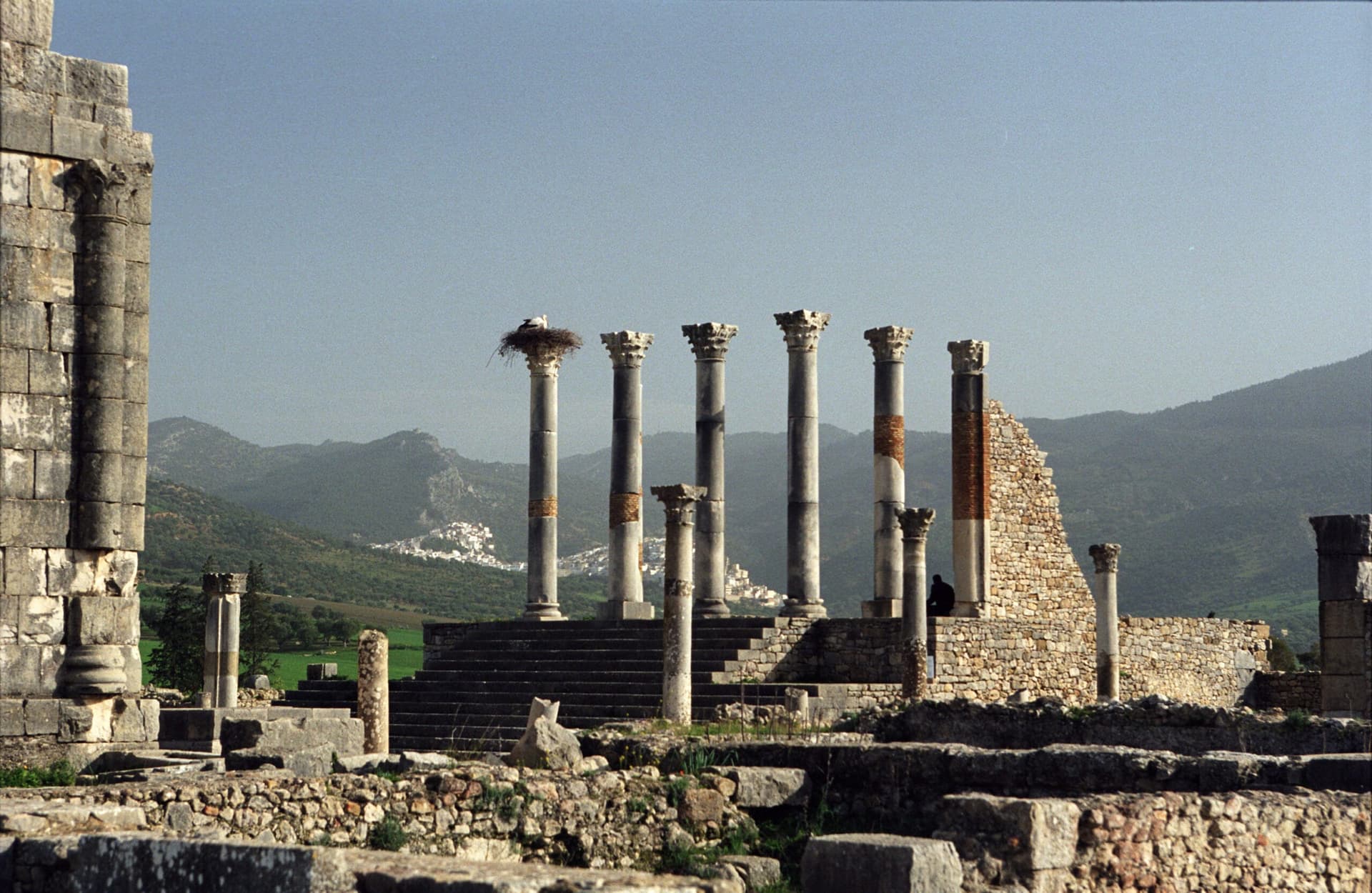
The Capitol, or Capitoline Temple, stands within the civic core of Volubilis and represents the religious dimension of the Roman city. Associated with the Temple of Jupiter, it formed part of the public monumental group that included the Forum and Basilica. Its location beside the main civic spaces reflects the Roman habit of placing religion, administration, and public identity in close architectural dialogue. The surviving remains allow visitors to understand how worship and state power were expressed through elevated platforms, columns, and carefully positioned sacred architecture. Although the temple no longer survives in its complete ancient form, its footprint and setting remain highly evocative. From this area, travelers can look across the public core and appreciate the city’s planned arrangement, with sacred, civic, residential, and productive zones woven together. The Capitol is also an important reminder that Volubilis was not only a Roman outpost but a site layered with earlier Mauretanian and later Moroccan history. Its ruins belong to a broader occupation sequence recognized by UNESCO, in which several civilizations left traces in the same landscape. For visitors, the Capitol is best approached slowly, as part of a circuit linking the Forum, Basilica, and Decumanus Maximus. It is a key stop for anyone interested in the ceremonial and religious architecture of ancient North Africa.
Gallery