House of Orpheus
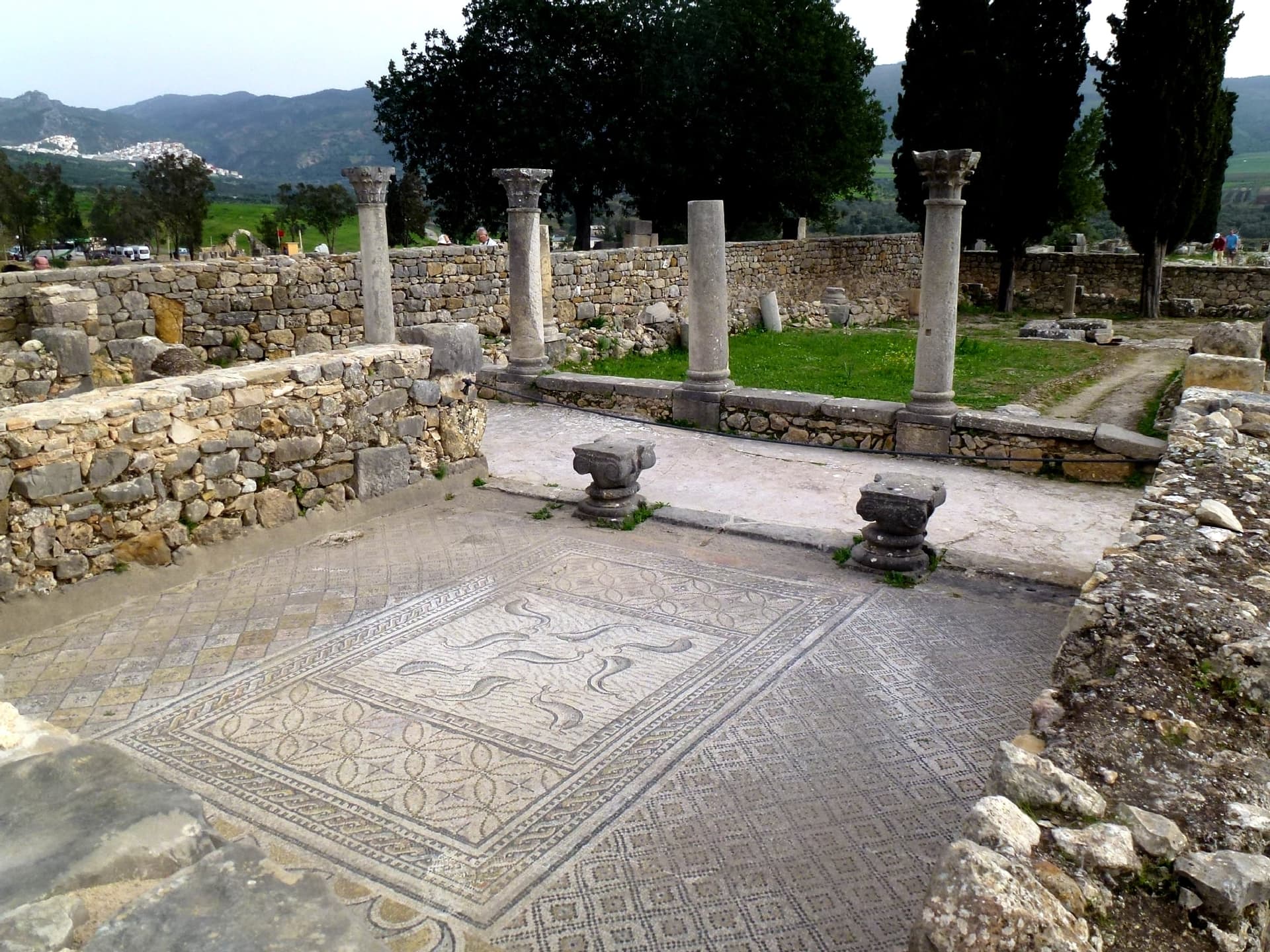
The House of Orpheus is one of the best-known residential remains at Volubilis, celebrated for its mosaic decoration and its connection to the artistic life of the Roman city. The Orpheus theme appears among the mosaic subjects identified at the site, reflecting the taste, education, and status of wealthy inhabitants. Unlike the monumental Arch of Caracalla or the public Basilica, this house brings visitors into the more intimate world of domestic display. The mosaic floor would once have formed part of a lived environment, giving beauty and meaning to a private residence while signaling the owner’s cultural sophistication. Today, it is one of the places where Volubilis feels most vivid, because the artwork remains connected to the architecture around it. The house also belongs to a wider mosaic landscape that includes the House of Venus, the House of the Labours of Hercules, and other named residences. Together, these homes explain why Volubilis is famous not only for its Roman ruins but for the quality and survival of its decorative floors. Visitors should take time to look carefully at the composition, patterns, and setting rather than rushing through the site’s domestic quarters. The House of Orpheus is an essential stop for understanding the personal, artistic, and household dimensions of this UNESCO-listed archaeological city.
Gallery