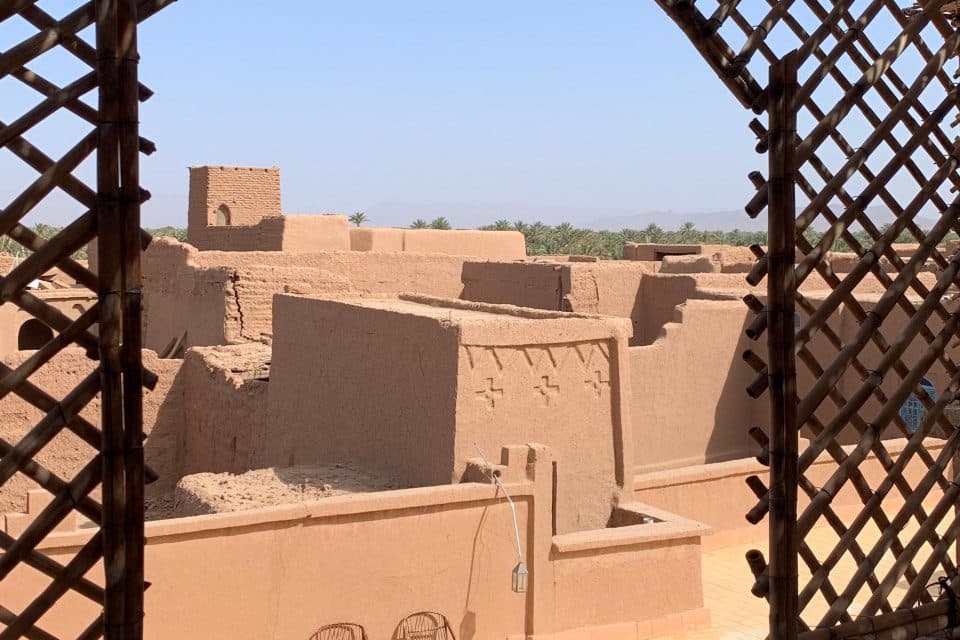
Ksar Tissergate
Ksar Tissergate is part of the wider corpus of fortified earthen settlements that gives the Draa Valley its powerful architectural presence. Located in the oasis corridor near Zagora, it illustrates the dense, defensive village form that developed along trade and agricultural routes. The ksar’s walls, passages and compact houses reflect a way of building designed for protection, shade and social cohesion. In this environment, architecture was never decorative alone. It controlled access, conserved cool air, stored harvests and created a protected community beside fragile palm groves and irrigation channels. Tissergate is often visited by travelers interested in the valley’s kasbahs and ksour rather than only its desert excursions. The experience is quieter and more interpretive than a major museum, but it offers a valuable view into the everyday structures that supported oasis life. Visitors can appreciate the texture of mud-brick walls, the rhythm of narrow lanes and the way the settlement sits within the larger landscape of palms and dry mountains. As with many Draa monuments, the site is best understood as part of a network rather than an isolated attraction. It represents the fortified language of the valley, where trade history, Amazigh communities, and environmental adaptation shaped a distinctive built heritage.
Gallery