Tinghir
An Amazigh oasis town and the access point for Todra Gorge, the Todgha Valley, palm groves, and mud-brick kasbahs.
What Is Tinghir Known For?
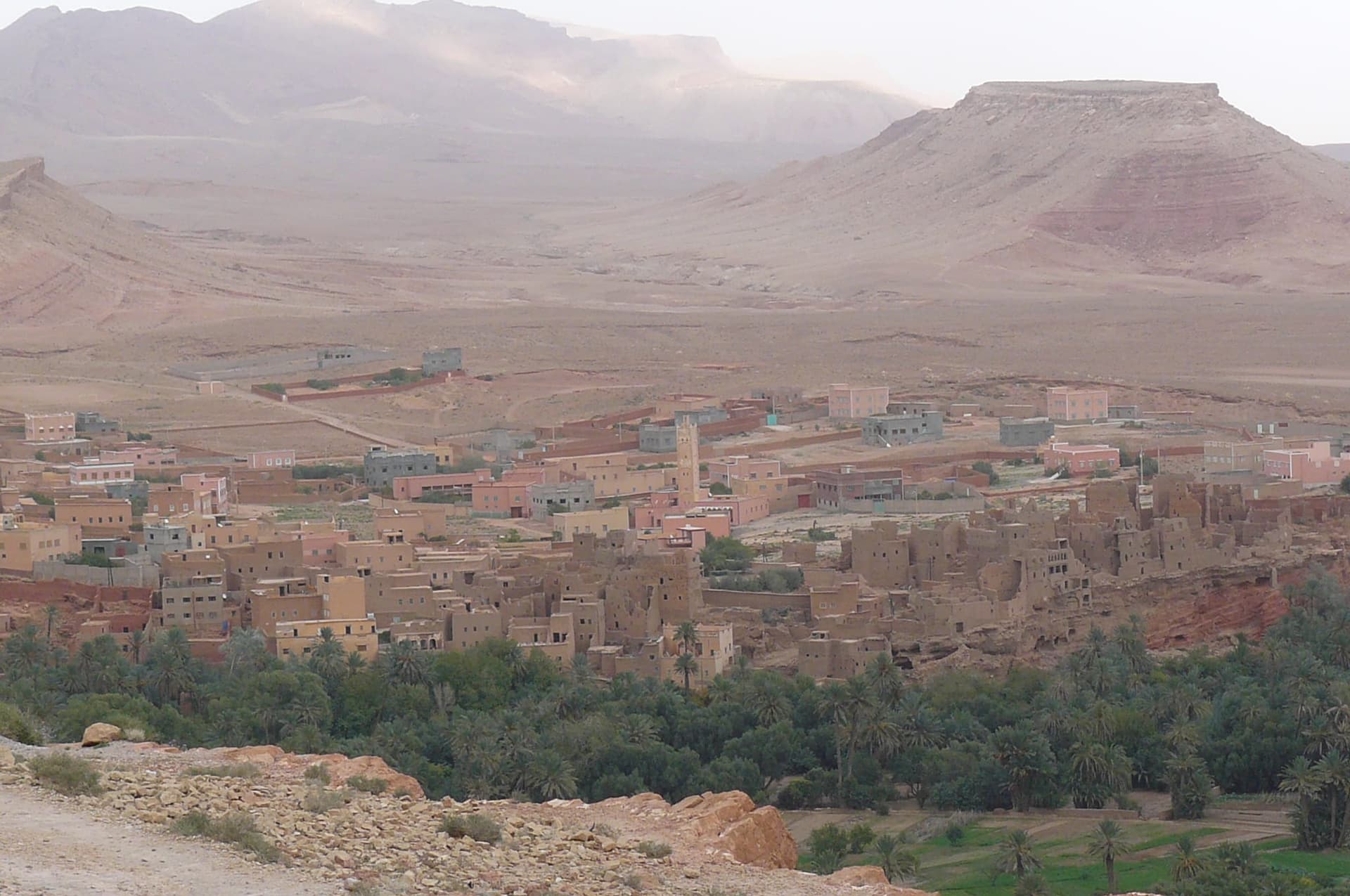
Tinghir is an Amazigh oasis city and the capital of Tinghir Province, set south of the High Atlas and strongly associated with the Todgha Valley and the nearby Todra Gorge.
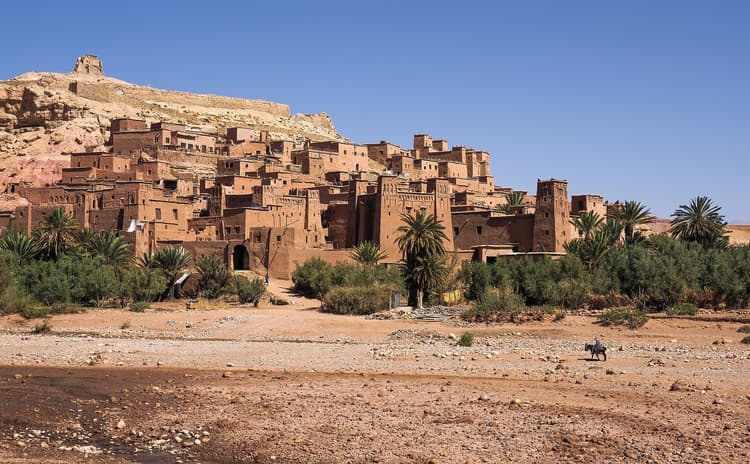
Its Wadi Todgha is a long palm-filled corridor extending about 30 miles, lined with mud-brick kasbahs and ksar quarters that connect travelers to the Road of Kasbahs.
31.5147° N, 5.5328° W
Arid / semi-arid
Errachidia Moulay Ali Cherif Airport
53,186 (2019 estimate; the 2014 census figure of 42,044 is now dated, and a more current 2024 census figure may exist but was not found in this pass)
Moroccan Dirham (MAD)
How Do You Get to Tinghir?
Find the best transport options to reach Tinghir comfortably.
By bus
Long-distance buses provide the most straightforward public transport option for Casablanca to Tinghir. Bookaway lists bus service on this route with several departures per week and a starting fare around $20, though live schedules should be checked before travel.
By train and connecting transport
A mixed public-transport route can combine train, bus, and taxi segments for travelers who prefer not to drive. FromTo.travel lists this as a practical way to reach Tinghir without a car, making it useful when direct bus timing is inconvenient.
By car
Driving offers the most flexibility for travelers planning to stop en route or continue through the Todgha and Dades valleys. Exact costs depend on fuel, tolls, rental terms, and route choice, so they should be checked close to departure.
By plane and taxi
Flight combinations may involve flying toward a regional airport such as Errachidia or Ouarzazate and continuing by taxi or private transfer. This can reduce road fatigue but depends heavily on seasonal flight schedules and onward transfer availability.
By private taxi
A private taxi or pre-booked transfer is the most direct door-to-door option, especially for small groups or travelers with limited time. Because Tinghir is far from Casablanca, the fare should be confirmed in writing before departure.
By rideshare
Rideshare availability can vary widely on long routes to Tinghir. If using a carpooling platform, confirm luggage space, pickup point, drop-off point, and whether the driver is going all the way to Tinghir or only to a connecting city.
What Are Tinghir's Main Districts?
Tinghir is organized into 6 main districts, from Central Tinghir to Todgha Valley Villages, each with its own character and things to do.
What Is the History Behind Tinghir's Kasbahs and Mellah?
Tinghir's history is rooted in the Todgha oasis, where mud-brick ksars, kasbahs, and palm groves developed around water, agriculture, and Amazigh settlement.
During the Protectorate period the town became an administrative center for the Todra Valley, and it preserves the memory of an important former Jewish presence, especially in the Aït el Haj Ali mellah.
Todra Gorge
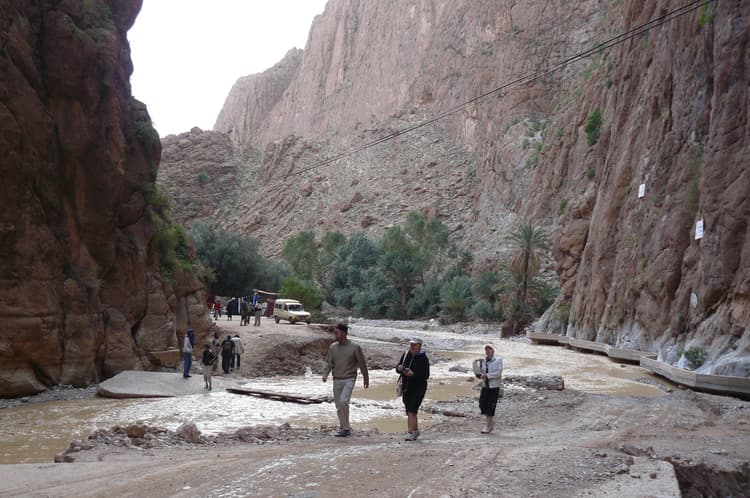
The celebrated limestone canyon beside Tinghir, known for high rock walls, a narrow valley road, and easy access from the Todgha oasis.
Tinghir Palm Grove
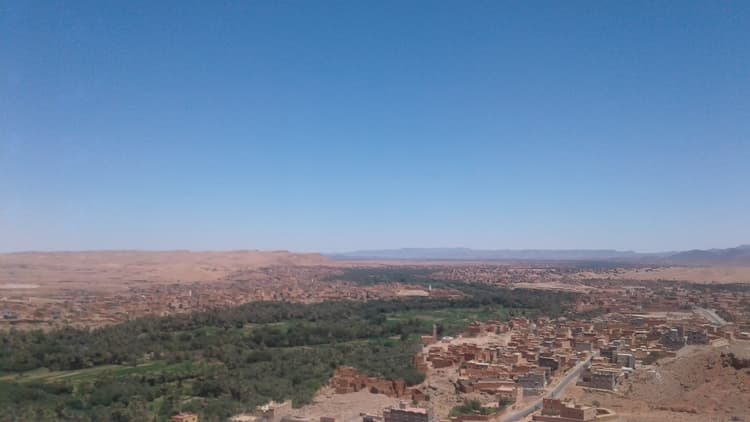
The irrigated oasis that follows the Wadi Todgha, forming a long green corridor of palms, gardens, fields, and villages below Tinghir.
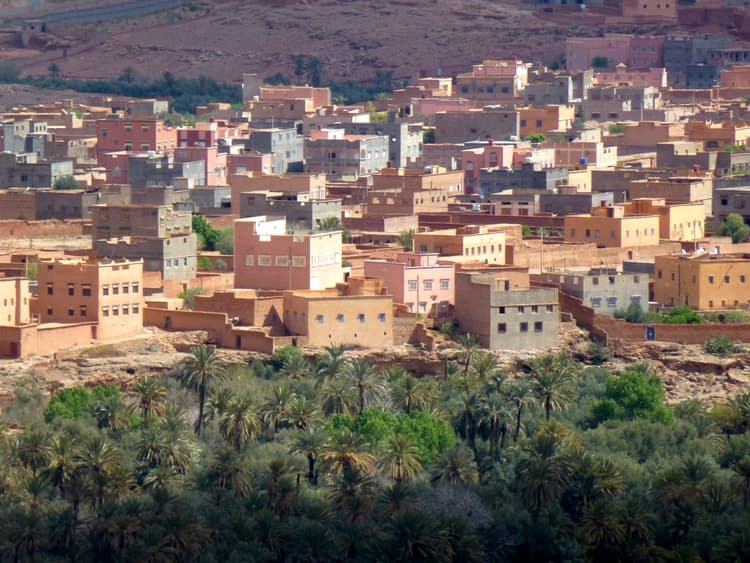
Ksar Tinghir
The old mud-brick settlement associated with Tinghir’s historic core, traditional architecture, and the fortified life of the oasis.
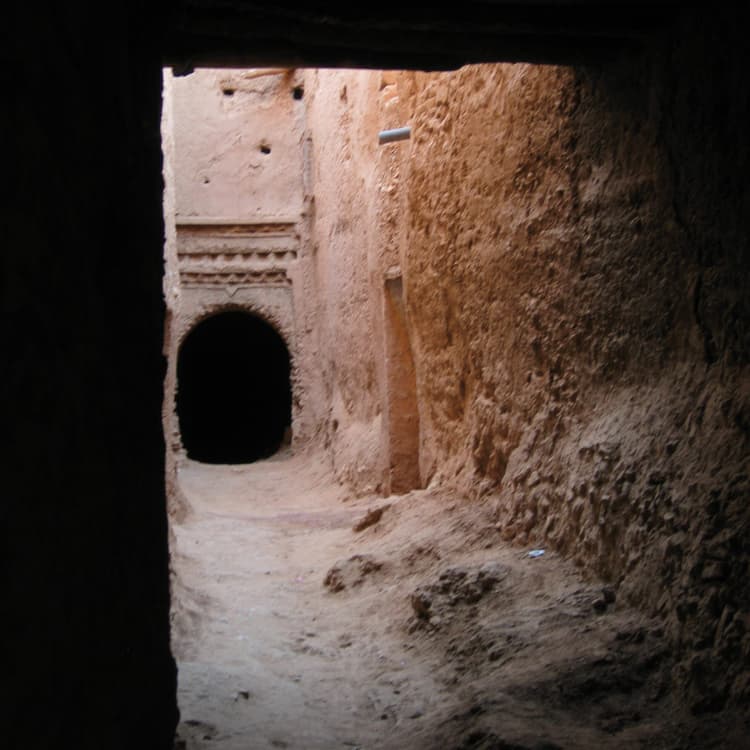
Aït el Haj Ali Mellah
A former Jewish quarter within the kasbah area, remembered for its historic homes, narrow lanes, and role in Tinghir’s community history.
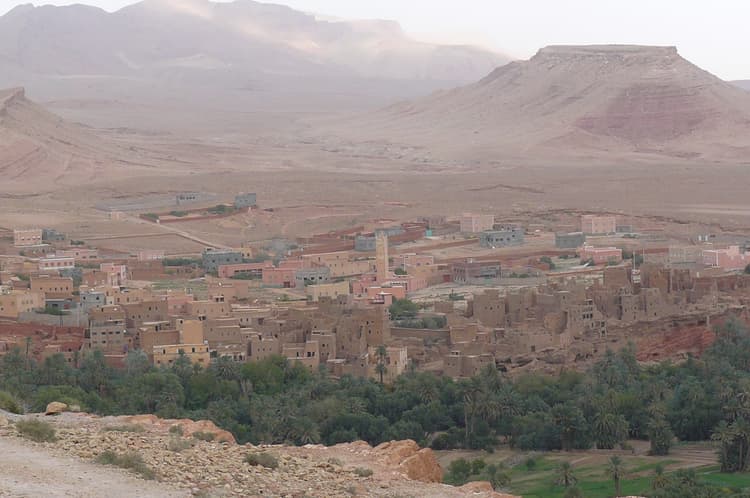
Glaoui Kasbah
A kasbah associated with the Glaoui presence in Tinghir and the Protectorate-era reshaping of the town’s administrative landscape.
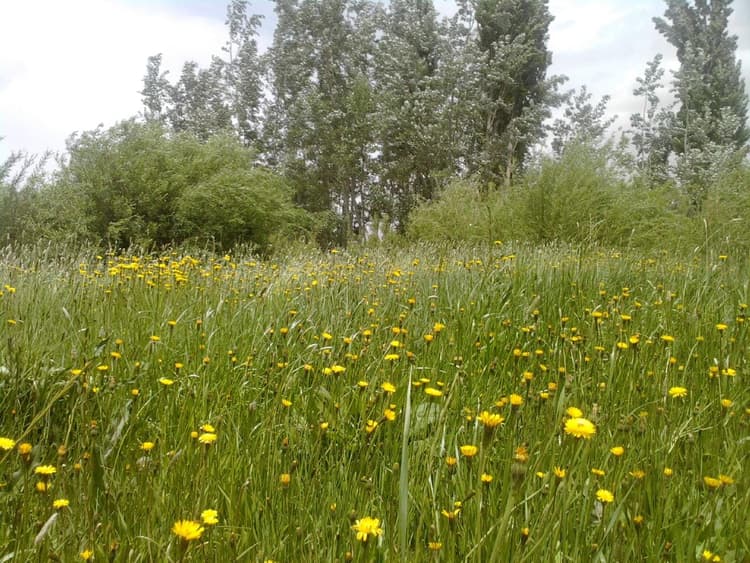
Todgha Valley Mud-Brick Villages
A chain of earthen villages and kasbahs along the Todgha Valley, linking Tinghir to the wider landscape of palms, fields, and mountain routes.
What Is Tinghir's Monday Souk Like?
Tinghir's shopping life centers on the weekly Monday souk, a long-established regional market where surrounding Amazigh communities trade produce, livestock, and handicrafts.
Prices vary by season, quality, and negotiation, so verify costs locally before purchasing.
The Souk Directory
Monday Souk
The main weekly gathering, traditionally held on Monday and described as one of the largest and most colorful markets in the region.
Produce and Spice Stalls
Stalls selling vegetables, dates, spices, and everyday food goods brought from the surrounding oasis and valley communities.
Crafts and Pottery Stalls
Market sections where local makers and traders present pottery, woven goods, textiles, and everyday handmade objects.
Textile and Rug Traders
Vendors offering Berber rugs, blankets, fabrics, and household textiles, with prices depending heavily on size, material, and origin.
Livestock Market
A traditional trading area historically associated with sheep, cows, donkeys, mules, and rural exchange from the surrounding communities.
The "Fair Price" Reference Table (2024 Estimates)
| Item | Local Name | Est. Price (MAD) |
|---|---|---|
| Dates | Tmar | Check locally |
| Berber Rug | Zarbia | Check locally |
| Spices | Aatar | Check locally |
| Pottery | Fekhar | Check locally |
| Silver Jewellery | Nokra | Check locally |
| Rose or Argan Products | Zite / Ma Ward | Check locally |
Which Tours Visit Tinghir?
What Are the Best Things to Do in Tinghir?

Frequently Asked Questions
The best conditions are generally in spring and autumn. Sources recommend March to May and September to November for outdoor activities, while summer can be very hot, with July maximum temperatures reported around 38°C.
The Moroccan Dirham (MAD) is the official currency. Exchange rates and ATM availability should be checked locally, and it is wise to carry cash for taxis, the Monday souk, small cafés, and guides.
No Tinghir-specific safety advisory is published. Travelers should follow normal Morocco precautions: keep valuables secure, use licensed transport or trusted transfers, confirm prices before services, and take extra care in isolated areas or after dark.
A reliable Tinghir-specific source on tap-water potability was not found. Travelers with sensitive stomachs should use bottled or filtered water and ask their accommodation for current local advice.