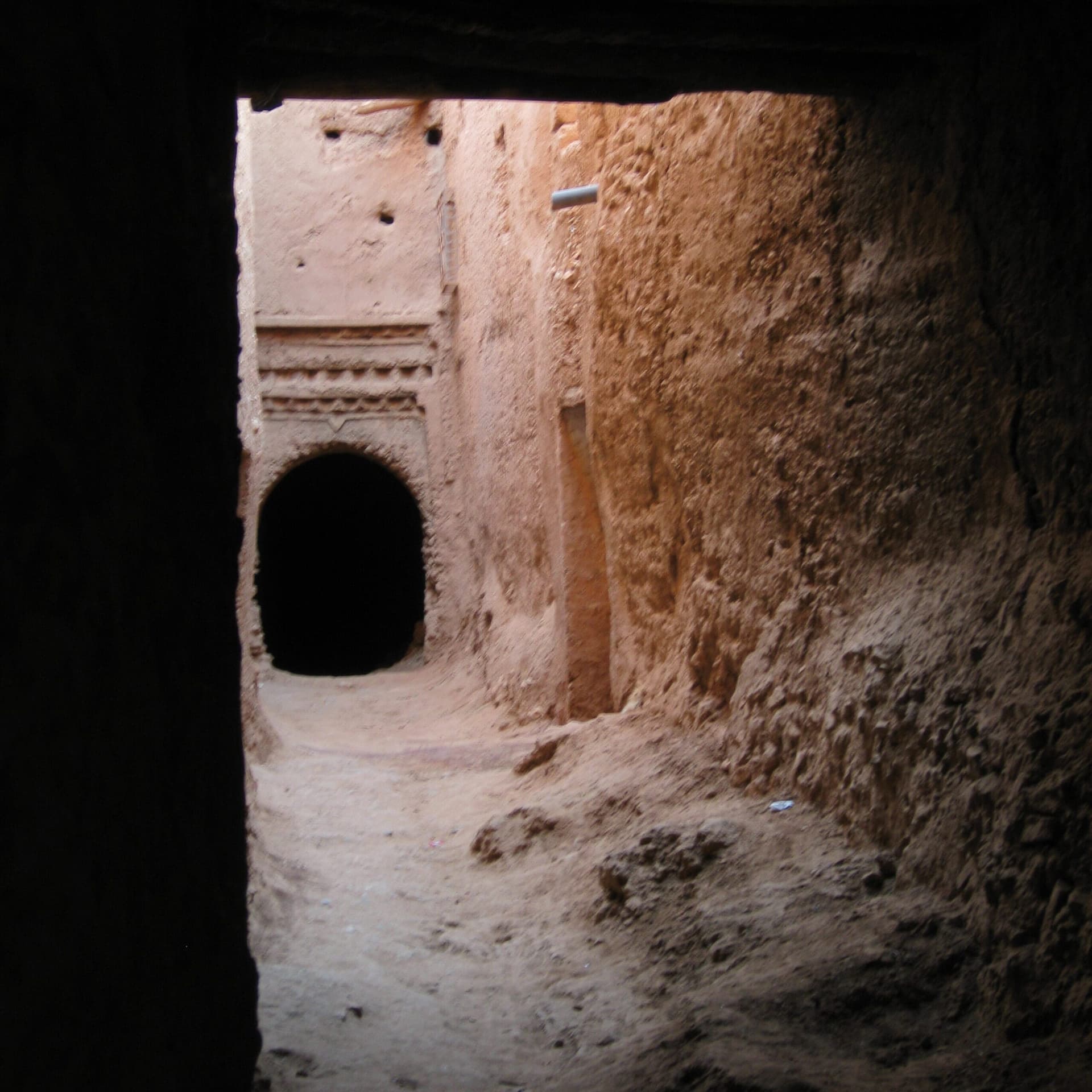
Ksar Tinghir
Ksar Tinghir represents the historic, earthen side of the city, where the older settlement pattern is associated with mud-brick construction, fortified domestic architecture, and the oasis communities of the Todgha Valley. Unlike the broad streets of the modern town center, this area is defined by compact lanes, traditional walls, and the memory of kasbah-style life. The ksar is part of the wider heritage landscape that links Tinghir with the mud-brick villages and palm-grove settlements stretching along the valley. Historical sources note that Tinghir became an administrative center for the Todra Valley during the Protectorate period, when new official buildings, barracks, and enlarged kasbah structures appeared near older settlement cores. For visitors, the appeal lies in walking slowly, observing the textures of rammed earth, shaded passages, and the relationship between architecture and oasis agriculture. The district is best approached with respect for residential life, as many heritage areas remain connected to local families and daily routines. Photography should be discreet, and a local guide can help interpret the difference between ksar, kasbah, and mellah spaces. This district is ideal for travelers interested in traditional southern Moroccan building methods, Amazigh oasis history, and the quieter layers of Tinghir beyond the gorge. It provides a valuable cultural counterpoint to the natural drama of Todra Gorge.
Gallery