Kasbah of Moulay Ismail
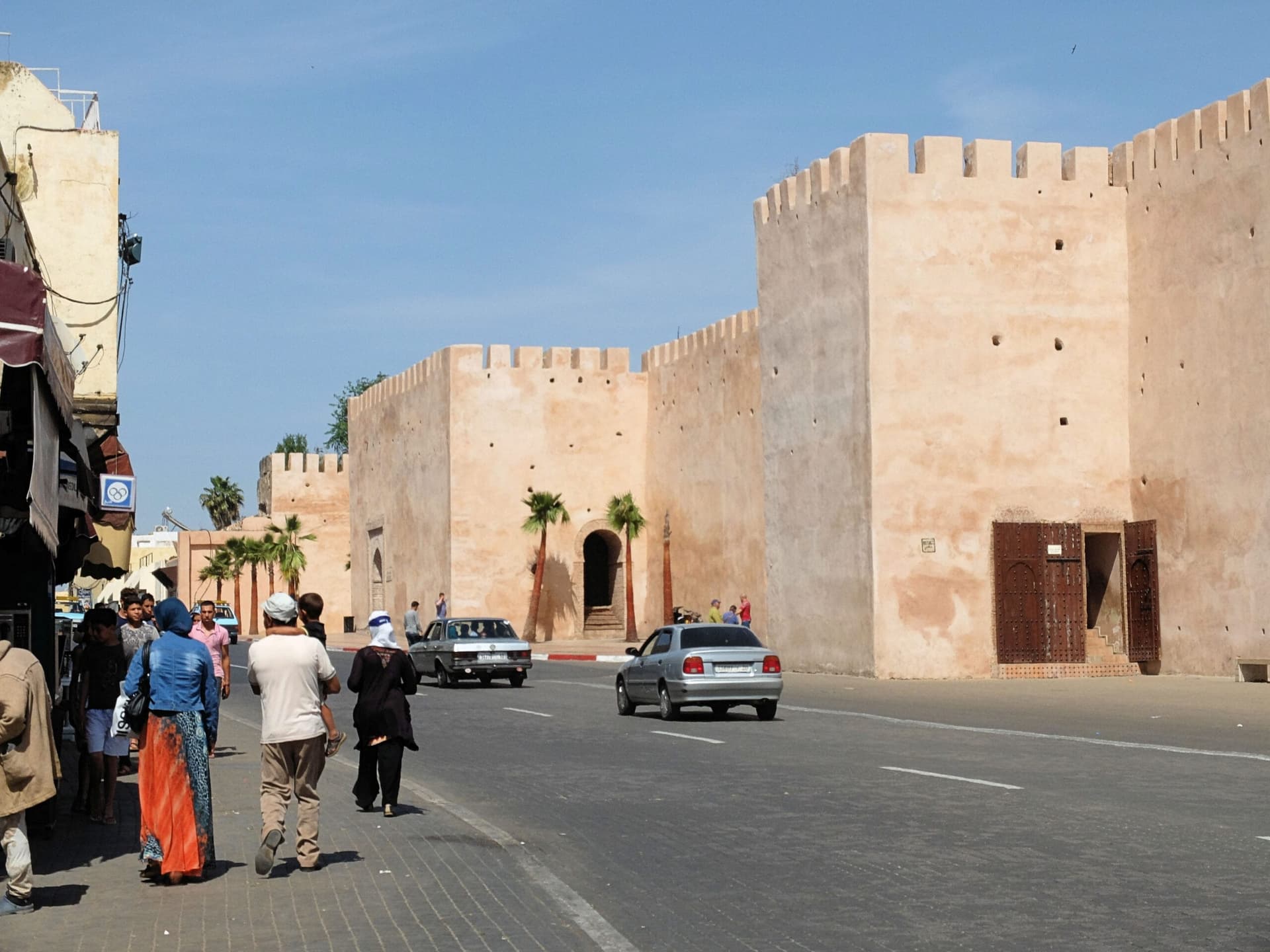
The Kasbah of Moulay Ismail is the vast royal and administrative complex that gives Meknes its strongest imperial identity. Built over many years after Moulay Ismail made the city his capital, it formed a palace city of walls, corridors, gardens, open areas, towers, bastions, and ceremonial spaces. UNESCO specifically distinguishes this kasbah landscape from the compact medina, emphasizing the scale and ambition of the royal enclosure. Although much of the palace world has changed over time, the surviving walls and related monuments still communicate the power of the seventeenth- and eighteenth-century capital. Visitors encounter the kasbah through a sequence of gates, ramparts, and nearby landmarks rather than through a single museum-like entrance. Bab Mansour, the Mausoleum of Moulay Ismail, Heri es-Souani, Sahrij es-Swani, and the broader imperial city all form part of this historical setting. The district is best explored with attention to scale: long blind walls, broad spaces, and monumental thresholds replace the dense intimacy of the medina. This contrast is central to the experience of Meknes. The kasbah was designed to project authority, defend the ruler’s city, and organize the machinery of an imperial capital. Today, it remains one of Morocco’s most important urban ensembles for understanding Alawite power and imperial planning. Travelers interested in architecture, history, and photography should allow time to move slowly between its major sites.
Gallery