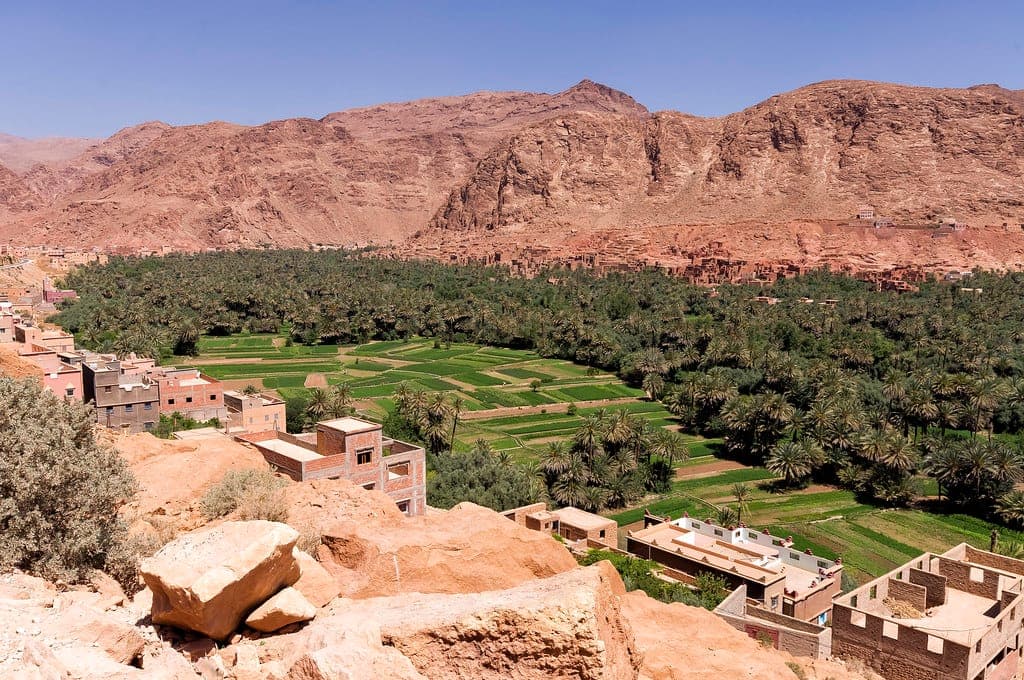
Upper Dadès Route to M’Semrir
The Upper Dadès route toward M’Semrir reveals the valley’s high mountain character and its historic role as a corridor of movement. Beyond the most visited sections of Dadès Gorge, the road continues through quieter landscapes of river gardens, rocky slopes, villages, and highland terrain. M’Semrir is often described as lying near the top of the Dadès Valley at around 2,300 meters, a setting connected to nomadic traditions, market life, and older caravan routes used before modern road access. This part of the valley is more demanding and less polished than the main tourist stretch, which is precisely its appeal. Travelers encounter a landscape where altitude shapes architecture, clothing, agriculture, and daily rhythm. The road can be beautiful but should not be underestimated, especially in winter, after rain, or when continuing toward remote high-country routes such as those leading in the direction of Imilchil. Fuel, cash, food, water, and daylight planning matter more here than in Boumalne Dadès. A local driver or up-to-date advice from guesthouse owners can make the journey safer and more meaningful. The Upper Dadès route is best suited to travelers interested in Amazigh mountain life, transhumance history, and the broader geography linking the High Atlas to southeastern Morocco’s desert-edge valleys.
Gallery