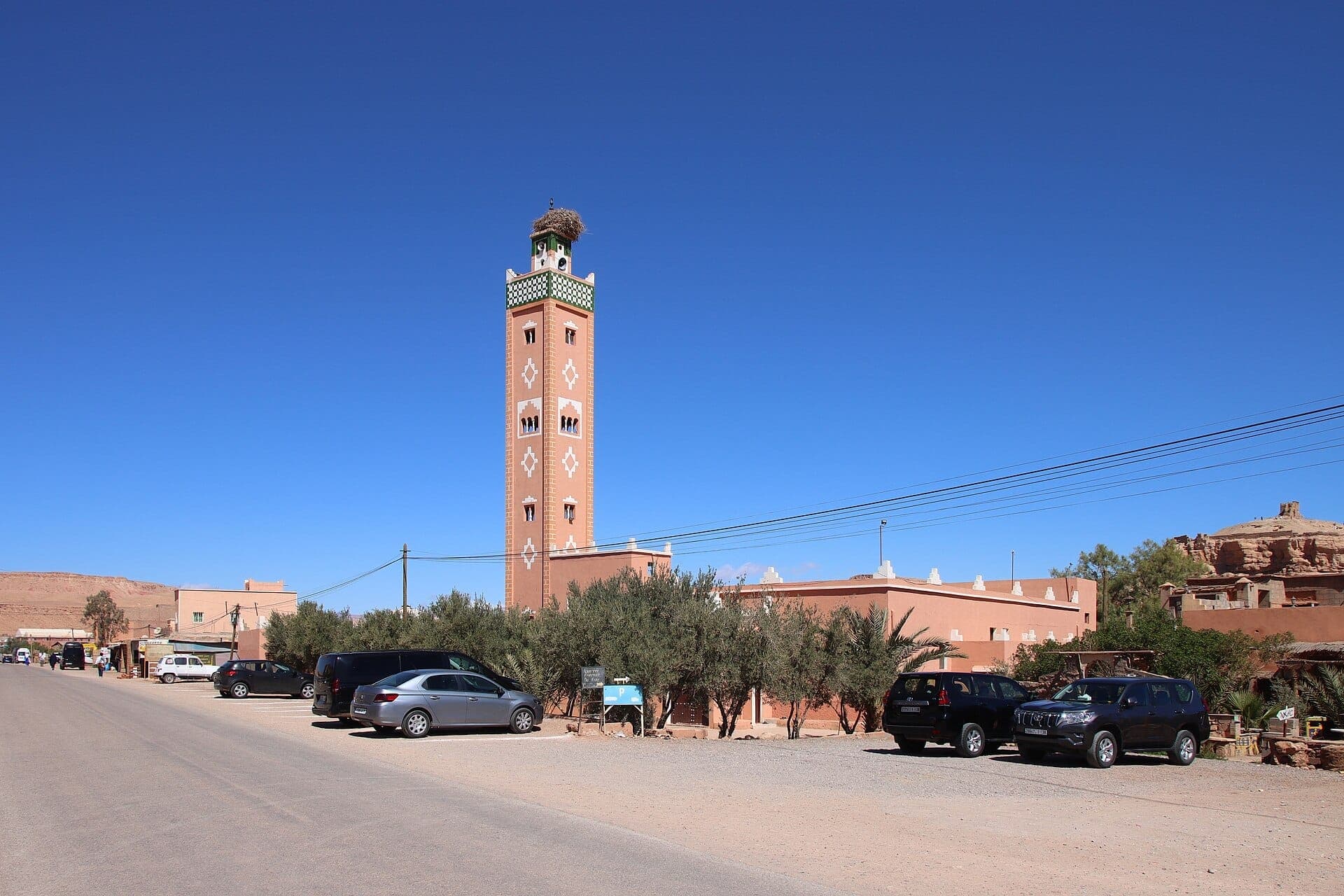
Mosque and Communal Spaces
The Mosque and Communal Area references within Aït Benhaddou point to the social life that once animated the fortified settlement. No single named mosque monument is documented for the site, but travel guide sources mention mosque or ruined-mosque elements as part of local guided routes through the ksar. These features are important because they remind visitors that Aït Benhaddou was not built only as a defensive shell or scenic caravan stop; it functioned as a community with places for worship, gathering, storage, trade, and daily domestic activity. Within the compact earthen enclosure, communal spaces would have been woven into the same architectural fabric as houses and towers. The modest scale of these areas contrasts with the dramatic exterior walls, offering a more intimate understanding of how people lived in a pre-Saharan fortified village. A guide is helpful for locating and interpreting these elements, especially because restoration, erosion, and private spaces can make functions difficult to identify independently. Visitors should approach respectfully, avoiding assumptions about access and treating any religious or community-associated space with care. The value of this monument group lies less in decoration than in context: it anchors the ksar as a lived settlement tied to faith, cooperation, and local organization. For culturally focused travelers, it adds depth to the visual experience of towers and panoramic viewpoints.
Gallery